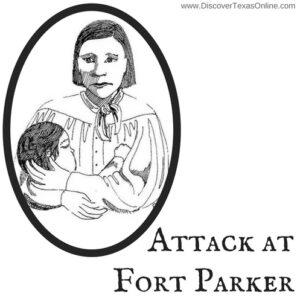
On November 30, 1544 hostile Indians attacked a small group of Spanish priests and Indian converts near Amarillo, Texas. Kneeling in prayer, Juan de Padilla sacrificed himself to give his companions a chance to escape. He was the first missionary martyred on Texas soil.
If you’re looking for ways to celebrate the holidays Texas-style, look into the Wonderland of Lights in Marshall, now in its 25th year or the Paseo del Rio and Fiesta de las Luminarias along the San Antonio Riverwalk!
Taking nothing from the Pilgrims, the first Thanksgiving in the New World took place in TEXAS, not Plymouth.
When Don Juan de Onate crossed the Rio Grande near San Elizario, Texas with 500 settlers on April 30,1598 he paused with his caravan to thank God for their safe travels thus far and ask His blessing on the remainder of their journey toward modern-day Santa Fe, New Mexico. This event, the first formal thanksgiving, took place 22 years before the Pilgrims’ celebration in 1620. The caravan would need God’s blessings. Their trek was known as La Jornada del Muerte–the journey of death.
Don Juan de Onate established the western branch of El Camino Real (the royal road), which provided an essential supply and communications link between Mexico City and Santa Fe. His was the first Spanish settlement. He is also credited with naming El Paso and introducing the horse, the Catholic religion, European plants and livestock to the New World. Unfortunately, his legacy also includes extreme cruelty to the Indians he encountered. Demanding that they supply his settlement with food they could not spare, he attacked and enslaved them when they could not meet his demands.
I don’t know about you, but that gives me much to ponder. Please comment. What do you observe through this historical out-take?
Defying Santa Anna’s dictatorship, the colonial government of Texas declared independence and began to raise an army. In November 1835, the General Council approved funds for a Texas Navy—four ships to defend the coastline against Mexican blockades. Read more about the Texas Navy here.
On November 19, 1854, Sam Houston was baptized in Rocky Creek, about two miles south of Independence Baptist Church in Independence, Texas. Throngs of onlookers witnessed the joyous and long-awaited event. When told that his sins were washed away Houston, who was quite a scoundrel, is said to have replied, “I pity the fish downstream!”
On November 13, 1961 the Devil lit his “Cigarette Lighter” in the Algerian Sahara when fire broke out at the Gassi Touil gas field. The fires burned until April 28, 1962 when Texan “Red” Adair put them out, earning worldwide fame.
“Red” Adair served with a bomb disposal unit during World War II. After the war, he began fighting oil well fires using a highly specialized (not to mention extremely dangerous) method of blowing the wells, depriving them of fire-feeding oxygen until they could be capped. Toward the end of his long successful career, he took part in controlling and extinguishing the oil well fires in Kuwait, set by Saddam Hussein’s retreating Iraqi forces after the 1991 Gulf War. Mr. Adair was 75.
your family might enjoy a weekend of hiking and camping in the Guadalupe Mountains.
You could also hike to see the native Texans’ Rock Art. There are actually tours at many locations in far west Texas and in the western regions of the South Texas Plains, so you’ll need to check the calendar to find a convenient date and place.
Visit Ysleta del Sur Pueblo Museum, part of the Ysleta del Sur Cultural Center in historic El Paso or contact Camel Treks and Camel Corp Re-enactments and get in on a Big Bend adventure!
The Bob Bullock Texas State History Museum in Austin is one of my favorites—a field trip that’s sure to get students interested in the adventure of learning their state history. Lots to see, hear, touch, explore…even an IMAX!
Several selections in San Antonio run a very close second. (I LOVE San Antonio—something that will probably become obvious as you read this blog.) If you are able to plan a Texas History field trip over a long weekend, you wouldn’t run out of things to see and do! Of course there’s the Alamo and four other historic Spanish missions. (Check the San Antonio Convention and Visitors Bureau for information.) Perhaps less well known is the Institute of Texas Cultures, displaying the best aspects of all the many people groups who now call themselves Texans. And the The Witte Museum has an excellent walk-through diorama depicting the geographical regions of our state, as well as a display of Texas’ first nations—the indigenous tribes.
This region also features:
- Cascade Caverns
- Caverns of Sonora
- Cave without a Name
- Inner Space Caverns
- Longhorn Caverns
- and Natural Bridge Caverns
- as well as many non-profit, private caves.
If that’s not enough, a fair number of forts such as Fort Martin Scott in Fredericksburg make for happy wandering.
…you’ve got a great choice of field trips with deep significance to Texas history. Explorers, missionaries, and revolutionary colonists converged here, and you can see where the action took place!
Replicas of Columbus’ ships, courtesy of Ships of Discovery, can be toured in Corpus Christi harbor. Though Columbus never made it as far as the mainland of Texas, these ships are typical of those that brought other explorers in the Age of Exploration. I was amazed at their small size! Not sure I’d want to cross uncharted oceans in such a small craft…
You could also visit:
The Texas Maritime Museum in Rockport also houses artifacts from LaSalle’s ship in their exhibit, The LaSalle Odyssey. Other Odyssey member museums include:
Matagorda County Museum (Bay City)
Corpus Christi Museum of Science and Natural History (Corpus Christi)
Calhoun County Museum (Port Lavaca)
Museum of the Coastal Bend (Victoria) and
Palacios Area Historical Association (Palacios), and La Petite Belle, a half-scale reconstruction in Palacios home port.
Free maps and pamphlets, available from A Shared Experience, could form the basis of a week-end driving tour of the earliest Spanish colonies, or you might choose a Texas Independence tour. Of course, Presidio La Bahia at Goliad, the San Jacinto Museum of History in La Porte, and the Star of the Republic Museum and Independence Hall at Washington-on-the-Brazos are great places to introduce students to the sweeping saga of our state.
If you prefer something even more interactive, try the Barrington Living History Farm near Washington-on-the-Brazos, Liendo Plantation in Hempstead, or the George Ranch Historical Park at Richmond.
…you’ll be pleased to know that field trips don’t have to be expensive.
Since East Texas was the cradle of colonization, several of our earliest historical sites are preserved through state parks or universities in your area.
Try:
- Caddoan Mounds near Alto
- Mission Tejas State Park in Grapeland
- the Stone Fort Museum and El Camino Real exhibit at Stephen F. Austin State University in Nacogdoches
- or the East Texas Oil Museum in Kilgore